
I
Safer, smarter chemistry.
T-24, a Clean Chemistry Technology, plus PAA and caustic tuned to your system. Antimicrobial intervention without the odor, the corrosion, or the surcharge.
Explore T-24 →An odorless antimicrobial intervention system — plus an on-site service partner — for US poultry & protein processors.
Teleios takes the most miserable part of your food safety program — the harsh acids — and we make it virtually odorless, gentler on your equipment, safer for your people, and ensure it's just as tough on pathogens. Then we put a Teleios person inside your plant to make sure it stays that way.
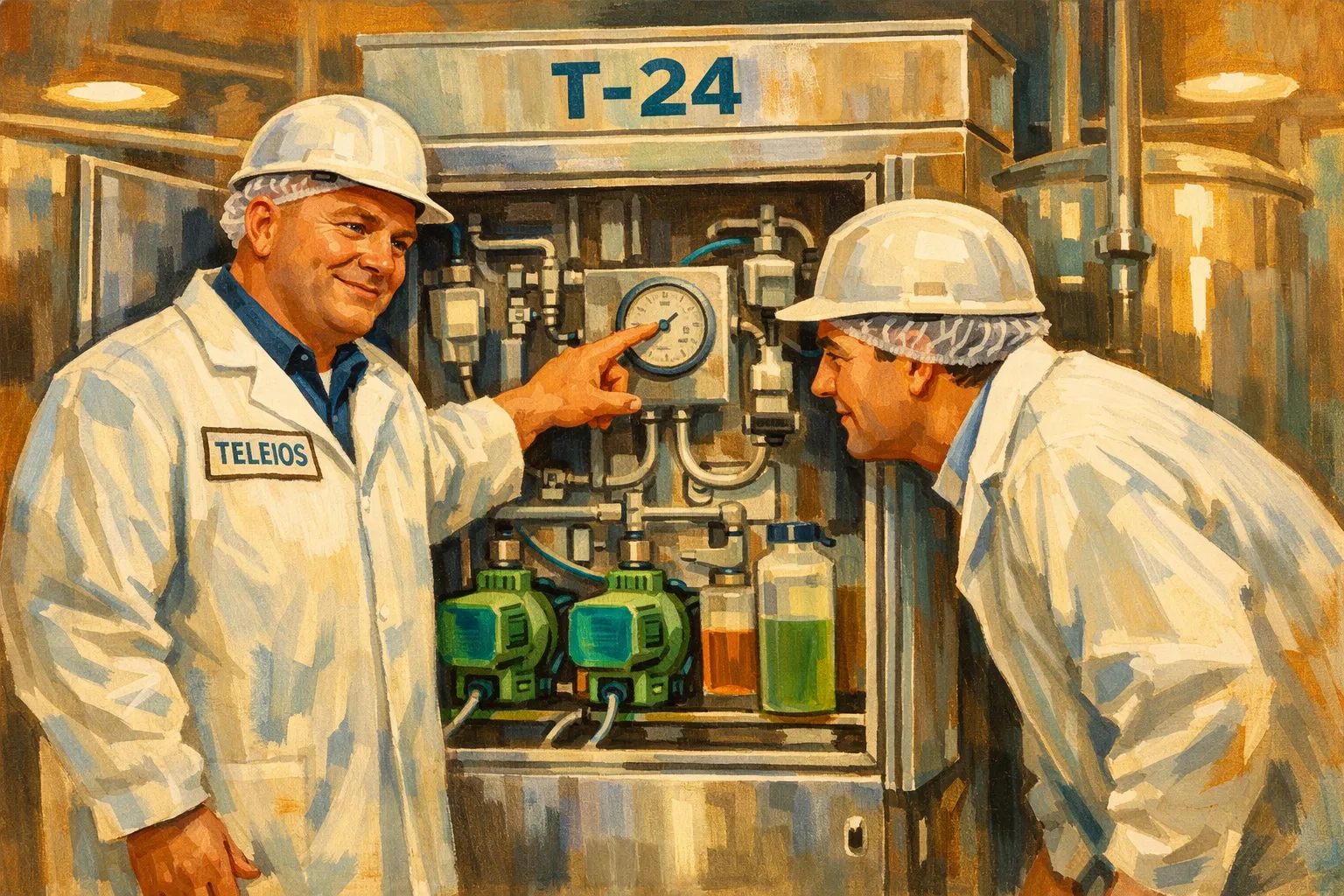
PAA and other harsh antimicrobials are the bargain most US protein processors live with every day — chemistry that does its job but makes six other problems worse. If your plant is fighting any of these, you are not alone, and you do not have to keep paying for them.
The micro numbers slipped, the letter came, and the first thing everyone looks at is your intervention program.
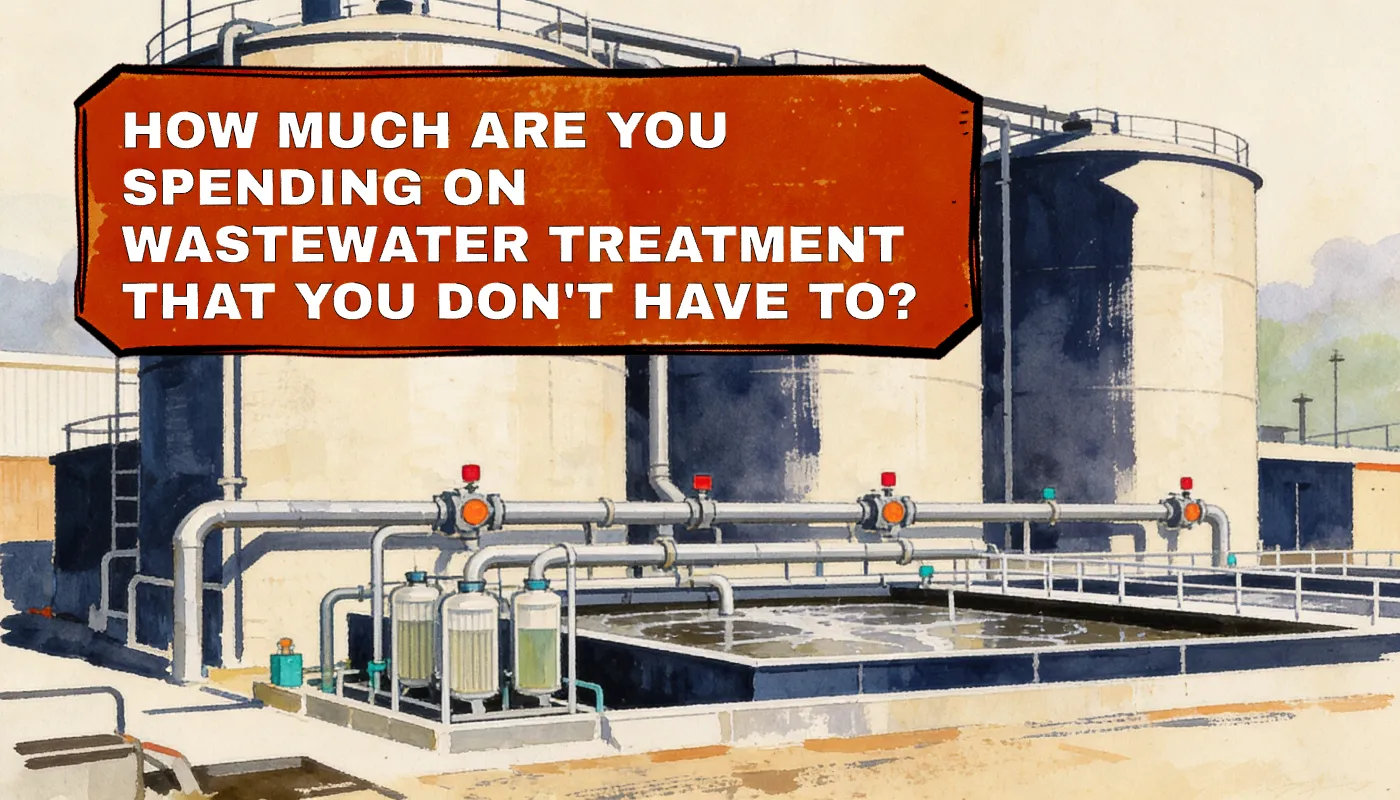
BOD load and organic surcharges — the second bill every gallon of PAA quietly keeps sending you.
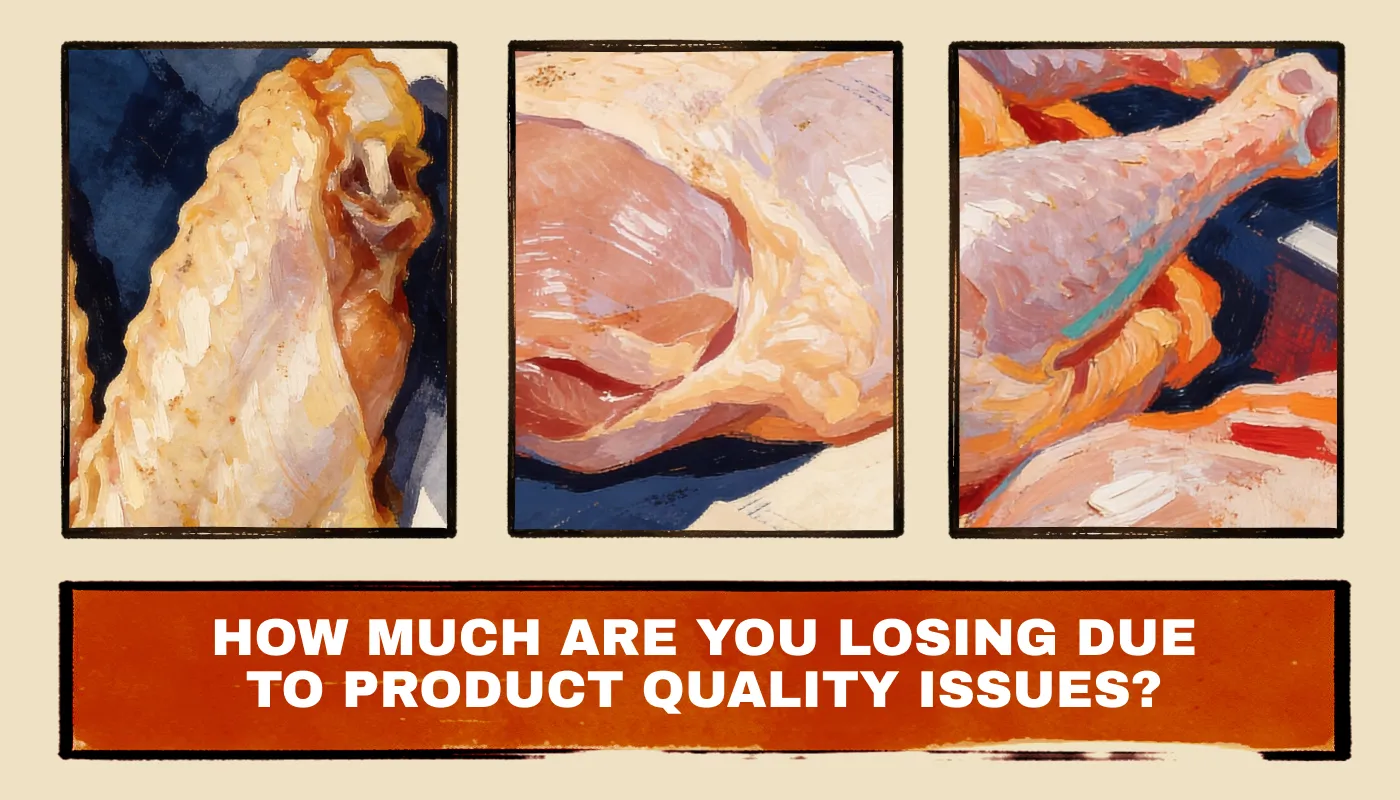
Bleaching, discoloration, an off-taste — quality flags that give your customers leverage to negotiate a lower price.
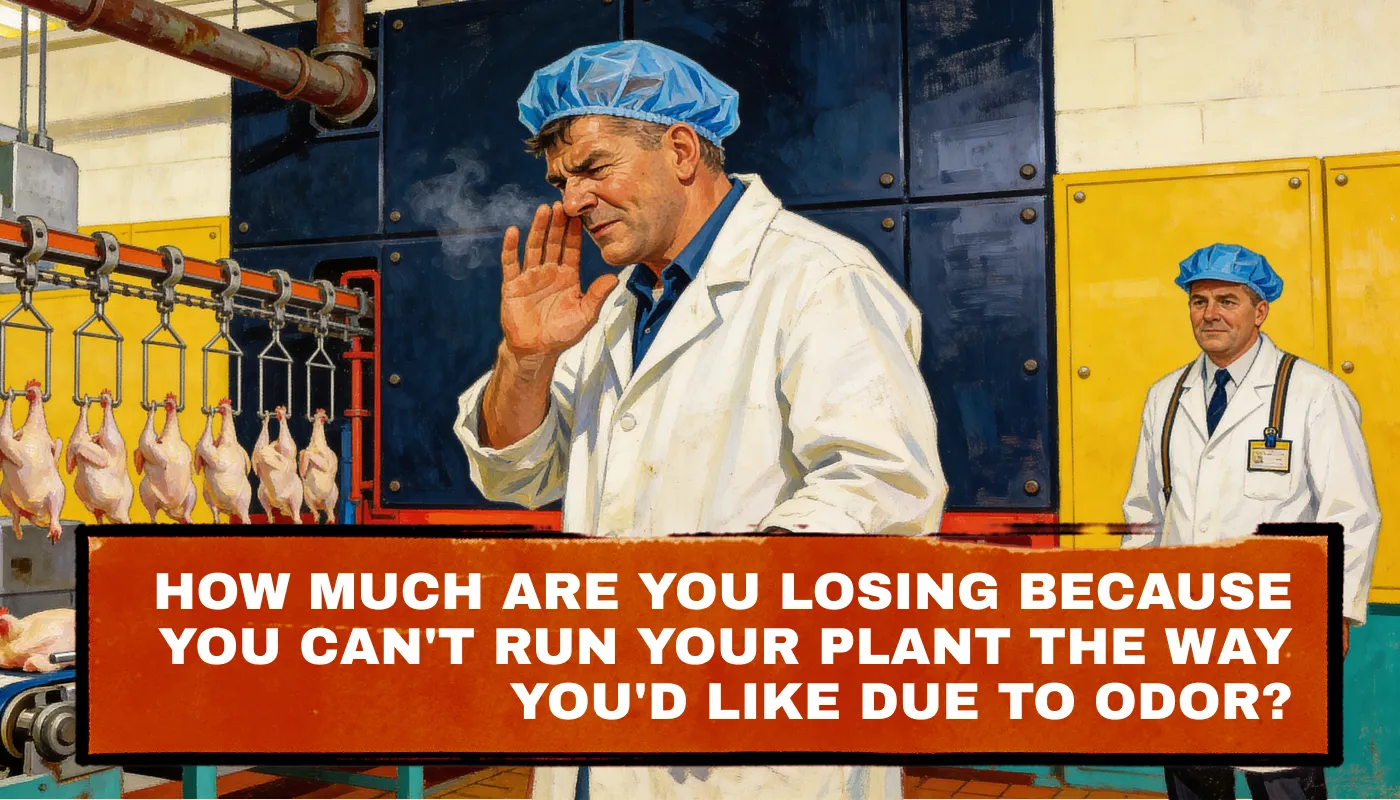
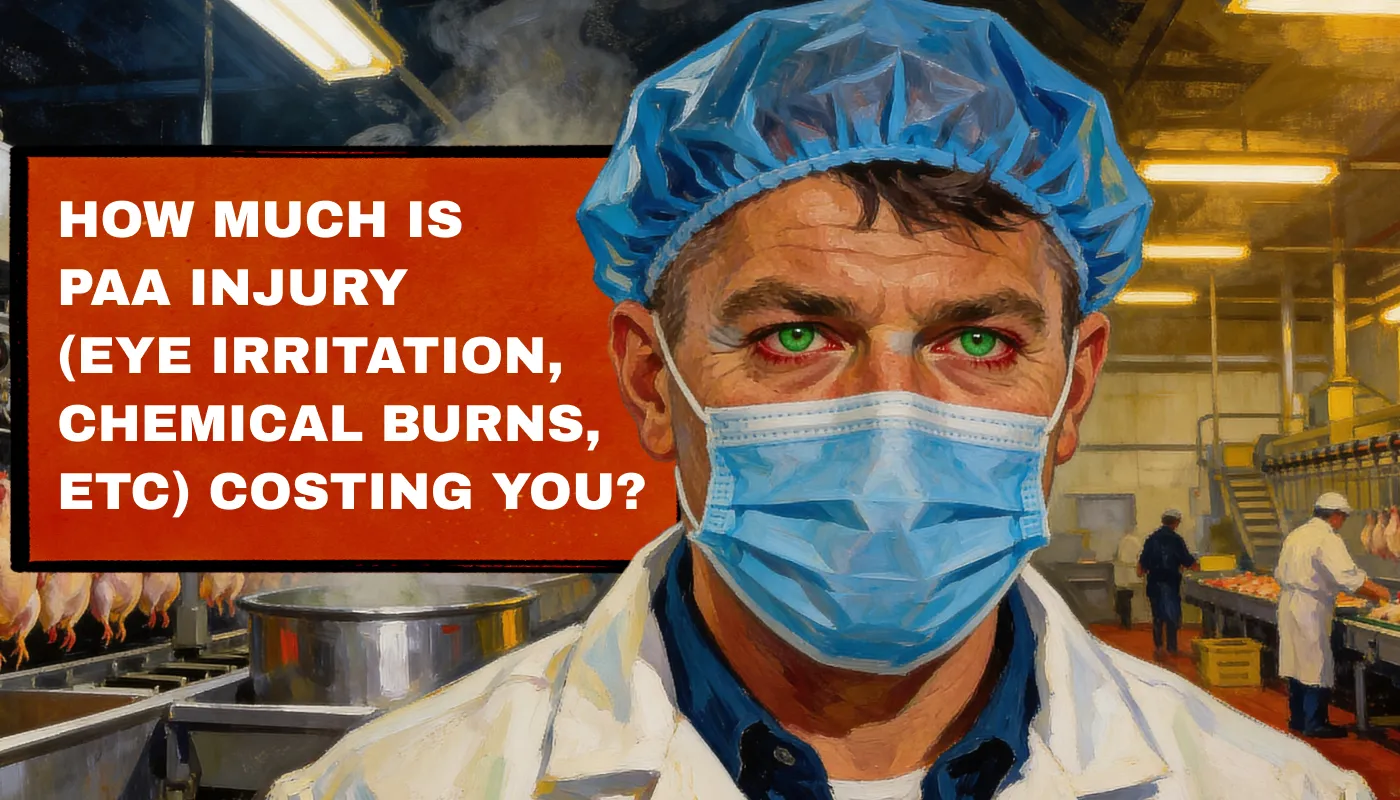
Turn the chemistry up to hit the numbers and the floor becomes a place your best-trained workers struggle to breath.
Conventional PAA is a legacy chemistry, and managing the daily line environment around it is ongoing overhead. A modern, sensory-friendly intervention lightens that load — and makes the line easier to staff.
Maybe concentration drifts or the system has issues... then, when you need help, getting a person to show up feels like a whole new job.
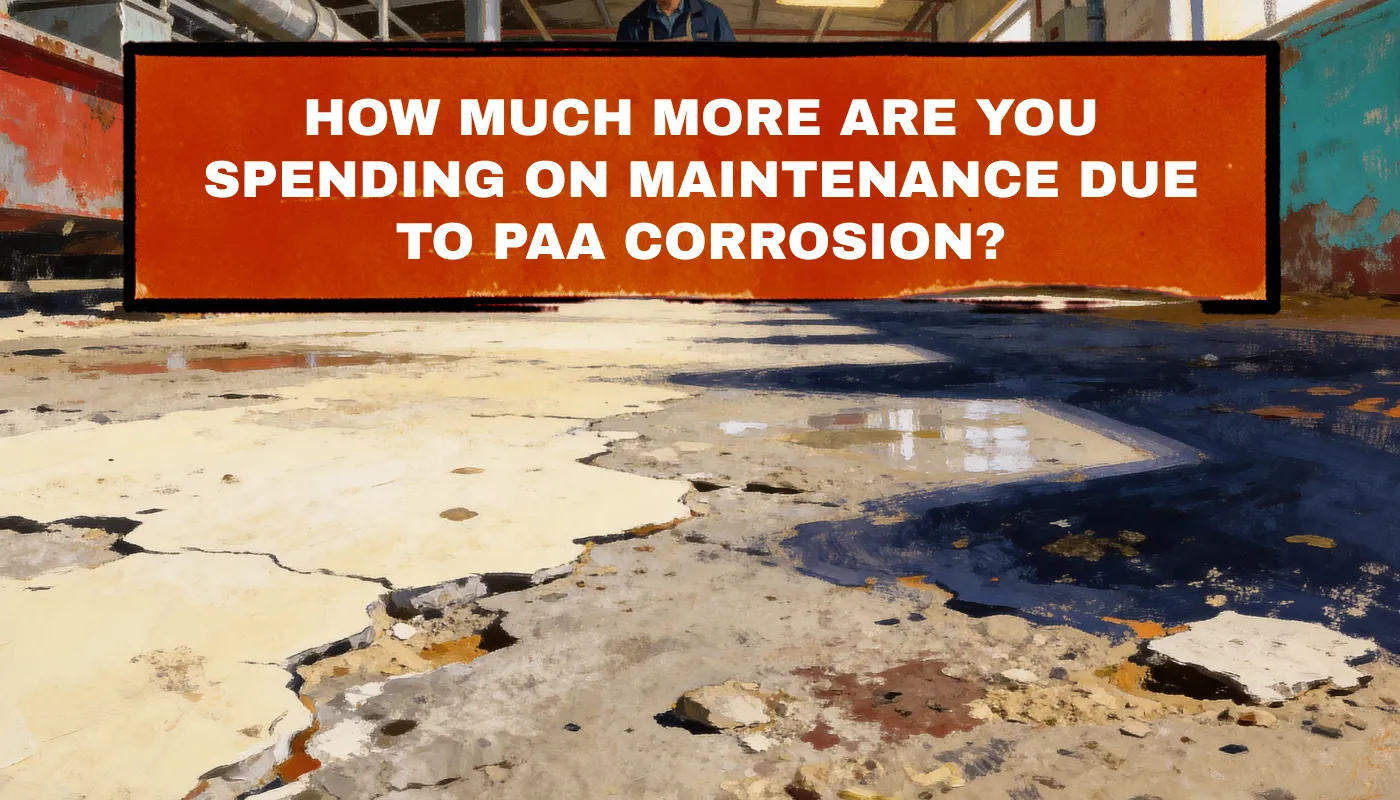
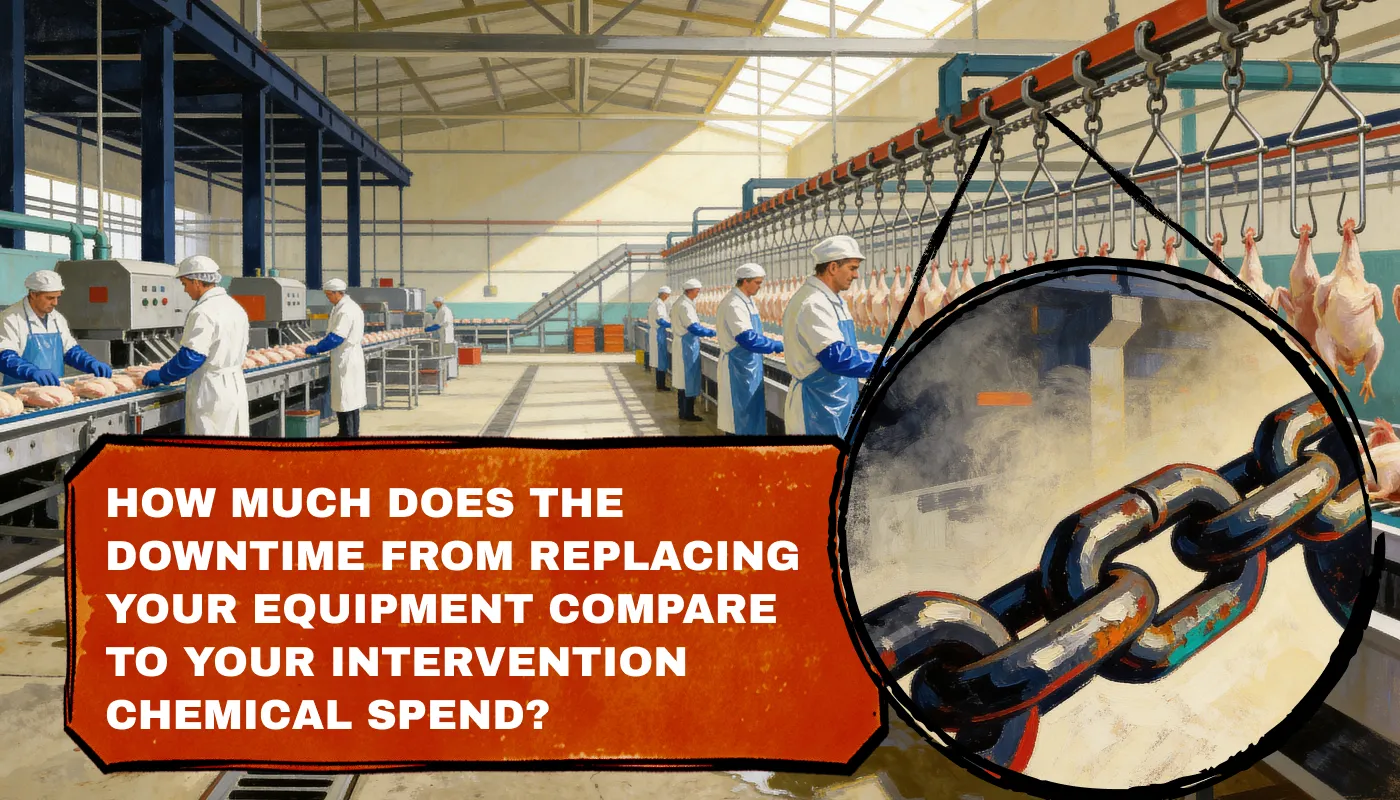
Two more costs hide in the floor and the equipment — we'll show you where in a plant visit.
You've already done this math in your head — late at night, in the truck on the way home. Here's the whole list, sitting in the same room together.

Our three promises to you.
T-24, a Clean Chemistry Technology, plus PAA and caustic tuned to your system. Antimicrobial intervention without the odor, the corrosion, or the surcharge.
Explore T-24 →Intervention programs tied directly to your KPIs. Quarterly self-grading against the metrics you already track. Real names on the phone.
See the Service Model →No disruption to existing sanitation contracts. We plug in alongside the team you already have, on the schedule the line already runs.
About Teleios →T-24 is a patented sodium peracetate antimicrobial, generated on site from three GRAS ingredients — sodium hydroxide, hydrogen peroxide, and triacetin. USDA FCN 2352 No Objection. Virtually odorless. Alkaline. Same antimicrobial kill as PAA.
You walk on to the plant floor. You take a breath. And nothing happens. No vinegar twinge in your nostrils. No watery eyes. Just air — in a room that twenty-four hours ago was a place your workers were holding their noses.
That's a hiring obstacle solved. A turnover obstacle overcome. The new hire that may have no-showed that shows up on Day 1.
The dark burn spots are gone. The striping on breast meat — gone. The mushy nuggets your biggest customer kept “flagging” — gone. Because PAA is an acid, acid attacks meat, and you'd gotten so used to seeing it that you started calling it normal.
It wasn't normal. It was your chemistry chewing on the thing you were trying to sell. T-24 runs alkaline. It doesn't burn, strip texture, or dissolve the fat you're paying for by the pound. This helps you achieve better taste and a cleaner appearance.
Undiluted 22% PAA runs at a pH below 1 — more acidic than battery acid — eating your chains, seals, equipment, and concrete twenty-four hours a day. We've seen air-chill chain that should last 18 months only last 8 under PAA.
T-24's corrosion profile is closer to dissolved oxygen in water. Your equipment finally can live out the lifespan the manufacturer promised.
PAA leaves acetic acid, peroxide, and HEDP — all showing up as BOD load on a wastewater bill nobody connects back to the chemical barrel. T-24's BOD5 load is 4.25x lower. Less load to the drain, a lower surcharge on the bill, and a utility line that's been climbing for years finally moving the other way.
Under PAA, the ceiling on concentration was rarely based on data — it was how much smell your people could tolerate. As a result, your QA team's toolbox has been restricted.
Take the odor away and you take the ceiling away. Turn it up where the pathogens are, dial it back where they aren't. Concentration driven by science, not suffering.
T-24 isn't a slightly improved peracetic acid. It's what comes after peracetic acid.
Four resources covering the chemistry, the service, and the economics.
Honest side-by-side: chemistry, odor, corrosion, product quality, logistics, and service.
→ P-02Four phases, weekly numbers, and the scorecard the GM can hand to corporate. The service model behind every Teleios install.
→ P-03Why intervention chemistries are hard on people and equipment — and where T-24 fits at the dip tank.
→ P-04The full lineup of poultry antimicrobial interventions, side by side, built around your control points.
→The fastest way to know whether T-24 belongs in your plant is to schedule a plant visit. 30 minutes, no obligation.